Microcontrollers are used in a wide range of fields, including automotive, industrial control, consumer electronics, and the Internet of Things. Among them, drone technology is highly reliant on microcontrollers. High-performance, highly reliable MCUs determine the intelligence and stability of drone flight. Silicon Labs' MCUs, particularly the EFM8 series, have become the preferred choice of many manufacturers.
Drone technology is rapidly developing. Whether it's consumer-grade aerial photography drones, agricultural plant protection drones, or industrial inspection and logistics delivery drones, their core flight control performance, stability, and energy efficiency are highly dependent on the precision microcontrollers within them. Recently popular electronic speed controller (ESC) MCUs are primarily from the Silicon Labs EFM8 BB5 series and EFM8 BB2 series.
Silicon Labs Drone MCU: EFM8 BB Series
The EFM8 BB (Busy Bee) series is a family of 8-bit general-purpose MCUs from Silicon Labs, featuring a compact footprint and versatile functionality. They excel in drone electronic speed control applications, and recent market demand has significantly increased, leading to shortages and price increases.
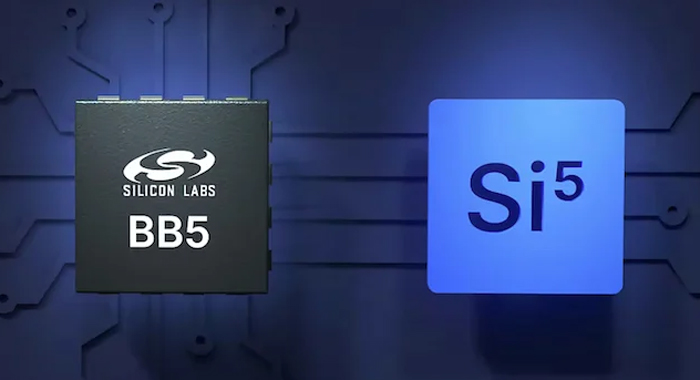
Source from Internet
The EFM8BB51, based on the wide-voltage 8051 platform and operating at 50MHz, is commonly used in applications such as home appliances, toys, battery packs, and optical modules. The most popular model is the EFM8BB51F16G-C-QFN20R. However, its hardware PWM support and excellent DShot ESC protocol compatibility make it a staple in drone ESCs.
The EFM8BB21 is a low-power platform suitable for applications such as motor control, consumer electronics, sensors, high-speed communication hubs, medical care, and lighting. The most popular model is the EFM8BB21F16G-C-QFN20R.
According to an evaluation of a foreign FPV drone platform, among the MCUs commonly used in multi-rotor ESCs, Silicon Labs' BB5/BB2 series ranked at the top of the overall performance rating for 8-bit MCUs. (Ratings from best to worst: BB5/BB2 > BB1 > F39X > F330 > Atmel-8-bit)
Main Advantages of the EFM8 BB Series
Hardware PWM and DShot Protocol Support: The EFM8 BB series supports hardware PWM and the advanced DShot ESC protocol, providing smoother throttle response and higher control precision, which are critical for drone flight stability.
High Performance and Cost-Effectiveness: This MCU series offers a cost-effective solution, achieving excellent performance within a limited cost and meeting the stringent cost control requirements of the drone market.
Small Package and High Integration: The EFM8 BB series MCUs utilize small packages (such as QFN20) while integrating a rich set of analog and digital peripherals. This helps reduce the number of external components, simplify designs, and lower overall bill of materials (BOM) costs.
Low Power: Although designed for high-performance applications, they maintain excellent power consumption, helping extend drone flight time.
Currently, the original equipment manufacturer's lead time for the EFM8BB51F16G-C-QFN20R is approximately 16 weeks, while the EFM8BB21F16G-C-QFN20R is as long as 20 weeks. However, distributors have indicated that the earliest shipment of the remaining out-of-stock chips will arrive in September 2025, and the shortage is expected to gradually ease.
Silicon Labs 32-bit MCUs and Wireless Solutions
In addition to the widely used 8-bit EFM8 series for electronic speed control (ESCs), Silicon Labs also offers the powerful 32-bit EFM32 series MCUs. These MCUs are based on ARM Cortex-M cores (such as the M0+, M3, M4, and M33) and operate at frequencies up to 80MHz.
The EFM32 series is recognized as one of the world's most energy-efficient microcontrollers, with active current as low as 21 μA/MHz and sleep current as low as 900 nA (using RTCC and RAM). It is ideally suited for power-sensitive high-end drone applications, such as flying platforms requiring complex data processing, long standby times, or advanced wireless connectivity (such as Bluetooth and Zigbee).
In addition, Silicon Labs' wireless SoCs (system-on-chips), such as the EFR32MG21 series (which supports multiple protocols), are also gaining popularity in IoT applications, providing more options for drones requiring robust wireless communication capabilities.
Selection Guide
Silicon Labs' MCU products are widely used in drone ESC systems and flight control, including multi-rotor drone ESCs, flight controllers, and intelligent battery management systems.

Source from Internet
As drone technology evolves towards greater intelligence, autonomy, and extended flight range, the performance, power consumption, and integration requirements of MCUs will continue to rise. Silicon Labs continues to invest in innovation, and its MCU product line is expected to integrate more features, such as advanced AI/ML edge processing capabilities, stronger security features, and more efficient energy management technologies.
Drone manufacturers and developers should consider the following when choosing a Silicon Labs MCU:
Clear application requirements: For ESC control, the high-performance EFM8 BB5/BB2 series is preferred. For complex computation or wireless connectivity, consider the EFM32 series or wireless SoCs.
Focus on packaging and power consumption: Select a model with the appropriate packaging and low power consumption based on product size and endurance requirements.
Evaluate the development ecosystem: Leverage the Simplicity Studio platform to accelerate development.
Understand supply availability: Plan and maintain communication with authorized distributors to address potential delivery challenges.
About Silicon Labs
As a fabless analog chip design company specializing in low-power wireless connectivity, Silicon Labs provides analog-intensive mixed-signal solutions for a wide range of electronic products in the IoT sector. Currently, its chip production primarily relies on foundry services from TSMC and SMIC.
In 2021, Silicon Labs sold its infrastructure and automotive business to Skyworks for $2.75 billion. This business, which included a portfolio of power, isolation, timing, and broadcast products, contributed $375 million in revenue in fiscal 2020, representing approximately 42.3% of total revenue.
After divesting its IA business, which had been experiencing declining revenue, Silicon Labs has completely transformed itself into a player focused solely on IoT wireless. According to Fortune Business Insights, the global IoT chip market size was $605.59 billion in 2024 and is expected to grow from $685.88 billion in 2025 to $1,662.58 billion in 2032, at a compound annual growth rate of 13.5%. In 2024, North America will dominate the global IoT chip market with a 32.23% market share.