Since the beginning of 2025, the global memory chip market has continued to heat up. After Sandisk announced a price increase in early September, NAND flash memory and DRAM prices have converged, with prices rising in tandem. Currently, DDR4 DRAM is in the most severe shortage, with manufacturers generally suspending quotes and spot prices rising by over 12.4%. Micron notified customers in early June that DDR4 had entered the end-of-life (EOL) phase, with shipments expected to cease in the first quarter of 2026. DDR5 DRAM supply has also been affected, with spot prices for 16Gb specifications rising by approximately 8.5%.
Price Fluctuations: DDR4 Leads the Market, Showing Extreme Market Imbalance
Since the second quarter of 2025, the DRAM market, particularly DDR4 products, has experienced unusual price fluctuations.
According to industry data, 16GB DDR4 modules have seen monthly price increases of 11% to 14%, the largest monthly increase since prices stagnated at the end of 2024.
On July 11, supply chain sources indicated that SK Hynix had raised DDR4/LPDDR4x contract prices by approximately 20%, signaling the beginning of a new round of price increases.
In the spot market, DDR4 prices rose by nearly 20% in just a few trading days, even exceeding quotes for higher-spec DDR5, creating a rare phenomenon of "price inversion."
The current DDR4 memory pricing system is chaotic, with some quotes increasing by as much as 100%. Spot prices have not only surpassed manufacturers' break-even points but have also entered a significant profit range.
Price Increases Driven: AI Demand Explodes the Storage Market
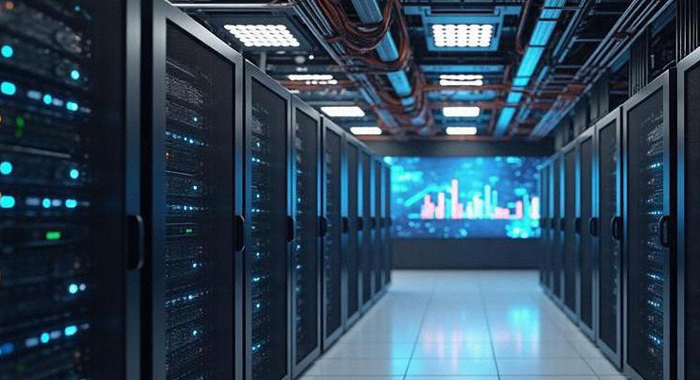
The explosive growth of AI technology has become the core driver of this round of memory chip price increases. AI training and inference require processing massive amounts of data, placing extremely high demands on storage capacity and bandwidth. A single AI server requires eight times more DRAM and three times more NAND than a typical server. SSD configurations for a single AI server are increasing from 64TB to 96TB and even 120TB.
Source from Internet
OpenAI's project "Stargate" requires 900,000 DRAM wafers per month, accounting for nearly 40% of global production. The four cloud giants have already placed orders for AI-related NAND, reaching 200EB, far exceeding their original 2026 projections.
High-bandwidth memory (HBM), a core component of AI servers, has seen its price surge 500% this year, exceeding $5,000 per chip. With gross profit margins reaching 50%-60%, customers need lock in production capacity a year in advance.
Meanwhile, Micron recently announced the delivery of 12-layer, 36GB HBM4 samples to a key customer, with mass production planned for 2026 to support the needs of next-generation AI platforms.
Supply Restructuring: OEM Capacity Shifts Exacerbate Shortages
Capacity adjustments by the three major memory OEMs are the core reason for this market volatility. To pursue the higher profits of HBM and high-end products, Samsung, SK Hynix, and Micron have all shifted significant amounts of traditional DRAM production capacity (especially DDR4) to DDR5 and HBM, resulting in a sharp decline in the supply of older process products like DDR4.
The mid-year discontinuation of DDR4 production already caused shortages and price increases. Now, the price increases have spread to DDR5. Samsung plans to complete final orders for DDR4 chips in June 2025 and complete module shipments by mid-December of the same year. SK Hynix expects to cease accepting orders in October 2025 and complete final shipments in April 2026. SK Hynix plans to reduce its DDR4 production capacity to 20%.
In the NAND field, manufacturers are reducing consumer-grade production capacity and shifting to enterprise-grade 3D QLC products. This capacity restructuring has led to a mismatch between supply and demand in the market, with high-end products in short supply and low-end products experiencing mismatches due to the rapid production cuts. Both mechanical hard drives and solid-state drives are experiencing shortages and price increases this year. With HDDs already in short supply, data centers are beginning to introduce SSDs on a large scale for storing training data. The demand for QLC flash memory will continue to grow, thereby boosting the overall market of NAND flash memory.
Technological Evolution: HBM and Advanced Processes Take Center Stage
Technological iteration in the storage industry is accelerating significantly. In the HBM field, SK Hynix leads with HBM3/HBM3E, holding approximately 60% of the global market and pioneering the release of 12-layer HBM4 samples.
JEDEC released the HBM4 standard in April 2025, featuring a 2048-bit interface, 8GB/s transfer rate, and a total bandwidth exceeding 2TB/s. It also introduced a low-voltage option.
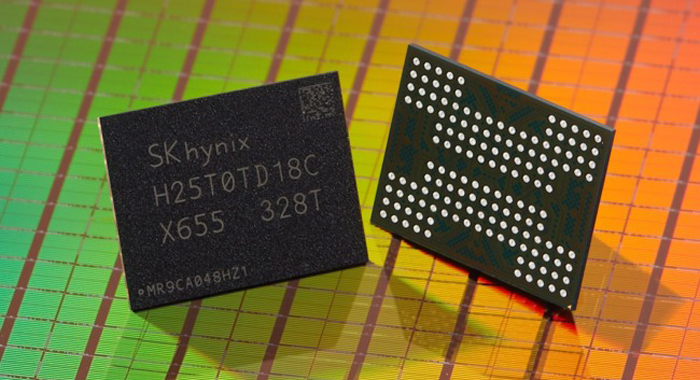
The number of 3D NAND stacking layers continues to climb. SK Hynix has already mass-produced the world's first 321-layer 2Tb QLC NAND, doubling its capacity and speed. The company plans to complete technical preparations for more than 400 layers by the end of 2025.
Source from Internet
Samsung's V10 NAND is planned to have 430 active layers and an interface speed of 5.6GT/s.
To meet the demands of AI inference, high-bandwidth flash memory (HBF) technology is emerging. Western Digital plans to launch an enterprise-level solution equipped with HBF in 2026, aiming to secure more than 30% of inference node orders from North American cloud service providers.
Market Outlook: Prices Continue to Rise in the Fourth Quarter, Accelerating Domestic Substitution
Multiple institutions predict that memory chip prices will continue to climb in the fourth quarter of 2025.
According to the CFM Flash Market Forecast, the global memory market will reach a record high of US$193.2 billion in 2025.
TrendForce predicts that NAND Flash contract prices will increase 5%-10% in the fourth quarter of 2025, with server eSSD prices potentially increasing by more than 10%.
DRAM contract prices are expected to rise by 10%-20% quarter-over-quarter. If HBM is included, the overall DRAM price increase will be 15%-20% quarter-over-quarter.
Amidst this price surge, domestic substitution of Chinese memory chips is accelerating. Yangtze Memory Technologies' independently developed Xtacking architecture increases the equivalent storage density to 294 layers and a bit density of 15.03 Gb/mm², surpassing Samsung and SK Hynix.
Changxin Memory Technologies' DDR5 product yield rate reaches 80%, and its unit wafer cost is 15%-20% lower than that of Korean manufacturers. In September 2025, Changxin Memory delivered HBM3 samples using its G4 process (16nm) to Huawei, with mass production planned for 2026.
The global memory chip market is undergoing a profound transformation driven by AI. With the full evolution of technology generations, DDR5 and HBM have officially become mainstream. Driven by capacity reallocation, product iterations, and growing demand for AI servers, memory prices are expected to remain high.
A Morgan Stanley research report indicates that, unlike traditional cycles that rely on consumer demand, this upswing is driven by enterprise AI capital expenditures, with the market expected to remain strong until at least the second quarter of 2026.