Infineon Technologies has made a significant breakthrough in automotive power electronics with the launch of its first AEC-Q101 qualified GaN transistor series—the CoolGaN™ 100V G1. This development marks a crucial advancement in bringing gallium nitride technology to the demanding automotive sector, offering engineers new possibilities for designing more efficient, compact, and high-performance automotive system.
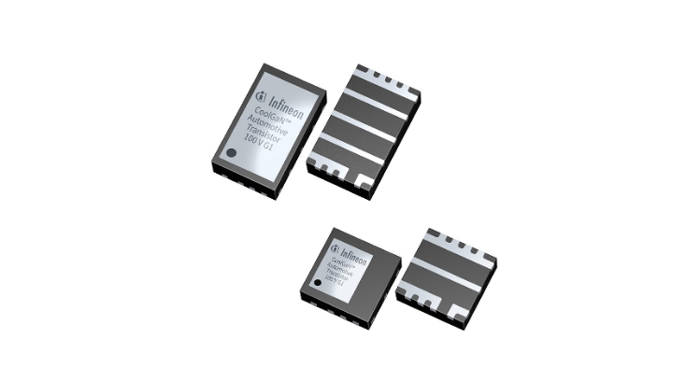
Source from Internet
The newly released CoolGaN™ 100V G1 series includes high-voltage GaN transistors and bidirectional switches, all meeting the stringent requirements for automotive applications. According to Johannes Schoiswohl, Head of GaN Business at Infineon Technologies, "This 100V GaN automotive transistor solution and our upcoming expansion into high-voltage portfolios represent an important milestone in developing energy-efficient, reliable automotive-grade power transistors".
Addressing Automotive Electronics' Evolving Demands
Modern vehicles incorporate increasingly sophisticated systems such as Advanced Driver Assistance Systems (ADAS), advanced climate control, and immersive infotainment systems. These applications demand higher power and more efficient power conversion solutions while minimizing battery drain. The automotive industry's shift toward software-defined vehicles and electrification further accentuates the need for compact, efficient power solutions.
GaN technology addresses these challenges effectively. Compared to traditional silicon-based devices, GaN power transistors offer superior performance in several key areas:
Higher efficiency in power conversion
Smaller form factors enabling more compact system designs
Reduced system costs despite higher component costs
Better thermal performance in high-temperature environments
The transition from 12V to 48V systems in software-defined vehicles particularly benefits from GaN technology. GaN-based power conversion systems not only enhance performance but also enable advanced functions such as steer-by-wire and real-time chassis control, significantly improving driving comfort and handling.
Key Application Areas for CoolGaN™ 100V G1 Transistors
Infineon's CoolGaN™ 100V G1 series excels in several automotive applications:
Zone Control and Main DC-DC Converters
The high efficiency and small size of these transistors make them ideal for architectural power distribution systems in modern vehicles, supporting the trend toward zonal electronic architectures.
High-Performance Auxiliary Systems
From advanced ADAS to sophisticated climate control systems, the CoolGaN™ 100V G1 provides the power efficiency and thermal performance necessary for reliable operation under demanding conditions.
Class-D Audio Amplifiers
The switching characteristics of GaN technology offer significant advantages for automotive audio systems, delivering cleaner sound reproduction in more compact form factors.
Market Context and Growth Trajectory
The introduction of Infineon's automotive-grade GaN transistors comes at a pivotal moment for the power electronics market. According to TrendForce estimates, the GaN power device market is projected to grow from 390 million in 2024 to 3.51 billion by 2030, representing a compound annual growth rate of 44%.
This growth is driven by GaN's expansion beyond consumer electronics into more demanding sectors, including automotive, data centers, and renewable energy systems. In the automotive sector specifically, Yole Development forecasts that the GaN power device market for traditional and electric vehicles will grow from 300,000 in 2020 to 160 million by 2026.
Industry Adoption and Implementation Partnerships
The automotive industry is already moving to integrate GaN technology into upcoming vehicle systems. Infineon recently announced partnerships with Forte Power Technology and Zero Extreme Innovation, demonstrating the practical implementation of GaN in automotive power systems.
Forte Technology, a major supplier of onboard chargers (OBC) and DC-DC converters for automotive manufacturers including Renault, Stellantis, Great Wall, GAC, Nio, XPeng, Xiaomi, BYD, Changan, and Leapmotor, has integrated Infineon's CoolGaN™ power devices and AURIX™ TC4x series microcontrollers into their latest high-performance automotive power supplies.
These collaborations highlight the growing acceptance of GaN technology in critical automotive applications and signal the beginning of broader adoption across the industry.
Technical Advantages in Automotive Systems
GaN transistors offer several technical benefits that make them particularly suitable for automotive applications:
High-Frequency Switching Capability
GaN devices can switch at frequencies exceeding 100kHz, enabling more efficient AC/DC conversion in onboard chargers and allowing for smaller filter components in DC-DC converters. This high-frequency operation translates to reduced energy losses during charging and more compact power supply designs.
High Power Density
The high electron mobility and breakdown field strength of GaN allow for higher power output in smaller chip areas. This power density is crucial in automotive applications where space is at a premium, enabling manufacturers to reduce the size and weight of electronic systems while maintaining or increasing power handling capabilities.
Thermal Performance
GaN material exhibits good thermal conductivity, allowing stable operation in high-temperature environments typical in automotive applications. This thermal resilience reduces dependency on complex cooling systems, simplifying thermal management designs while maintaining system reliability.
Challenges in Automotive Implementation
Despite its promising advantages, GaN faces challenges in automotive implementation:
Reliability Requirements
Automotive applications demand higher reliability standards compared to consumer electronics. GaN devices must withstand harsh operating conditions including high temperatures, humidity, vibration, and voltage fluctuations over vehicle lifespans of 15-20 years.
Cost Considerations
While GaN technology has long-term cost reduction potential through silicon-compatible manufacturing processes, current automotive-grade devices require extensive testing and validation, increasing initial costs. Wider adoption and economies of scale are expected to address this challenge over time.
Future Outlook and Application Expansion
The introduction of Infineon's CoolGaN™ 100V G1 transistors represents just the beginning of GaN's automotive journey. The technology is expected to expand into higher-power applications including:
Traction Inverters
Though currently dominated by silicon carbide (SiC) technology, GaN is making inroads into electric vehicle traction inverters, with companies like VisIC Technologies developing GaN-based solutions for 800V automotive applications.
Advanced ADAS and LiDAR Systems
GaN's high-speed switching capabilities make it ideal for automotive LiDAR systems, where fast pulse generation is essential for precise distance measurement and object detection in autonomous driving applications.
With the global GaN power semiconductor market projected to reach $1.33 billion by 2026, representing a compound annual growth rate of 65% from 2022 levels, the automotive sector will be a significant contributor to this expansion.
Availability and Supply Chain
Infineon is currently offering pre-production samples of the CoolGaN™ 100V G1 series that comply with AEC-Q101 standards, including high-voltage GaN transistors and bidirectional switches. This availability enables automotive manufacturers and suppliers to begin designing and testing these components for upcoming vehicle platforms.
The formal release of these automotive-qualified GaN devices represents a significant step in the maturation of GaN technology for the automotive market, providing design engineers with certified components that meet the industry's rigorous reliability and performance standards.
As the automotive industry continues its transition toward electrification and software-defined vehicles, GaN technology stands poised to play an increasingly important role in enabling the next generation of automotive electronics. With its combination of efficiency, power density, and growing ecosystem of supporting technologies, GaN is well-positioned to become a fundamental technology for the automotive power systems of tomorrow.